

Last week was Diwali. I ate sweets with my family and less work due to holidays. Then the holidays ended. Most of us did not want to go back.
I don’t think the work is the reason.
The work is fine. It’s how the work gets handled.
Today, I watched one engineer take a ticket queue from 30 down to 10 in five days. While 40 new tickets kept coming in. Their reward was a meeting that felt like mockery.
Do that to good people, and you don’t lose them today. You lose them by next year.
First, the good part
Diwali is the festival of lights. The name comes from Deepavali, “a row of lights.” Families light small clay lamps outside their homes, for the victory of light over darkness.
Around this time of year, it is the biggest and longest festival Indian’s have. Family meets family. We talk. We share food and eat lots of sweets, just to try. Everyone wears new clothes. The kids have their own fun with firecrackers.
Many of us were on vacation. I wrote once about why most people never take a real vacation. Last week was a real one. I had a great time.
Work was calm too. Then the vacation ended, and things went back to normal. I felt in the team that most of us did not want to go back.
The work is not the problem. How it gets handled is.
One person, five days, sixty tickets
One person was on call during the holidays. The team was running at 30 to 40 percent bandwidth, others were enjoying the festival time. The recurring meetings kept running anyway, standups included.
In one standup, a senior SDE, before going vacation, requested that the on-call engineer bring the ticket queue down from around 30 to 10. That is 20 tickets down.
Some were easy. Maybe 30 percent. Some of them requires deep investigation. About ten needed code changes had to be reviewed and deployed. And new tickets kept coming. Around 40 of them.
So the real number was 60 tickets in five working days. At least 10 to 12 a day.
Then come the pings. Peers, customers, stakeholders. Someone always shows up with a 15 to 20 minute task.
“It’s just one prompt for you. Run the Kiro agent and let it do the job.”
So it still lands on your plate and you are working in parallel, all day.
Everyone knows multitasking is bad for your mental health and your output.
In 2008, Gloria Mark, Daniela Gudith and Ulrich Klocke interrupted people while they worked on an email task. In The Cost of Interrupted Work: More Speed and Stress, they reported that interrupted people finished faster, with no drop in quality. But after only 20 minutes, they felt more stress, frustration, effort and time pressure.
Multitasking, with a price.
On a team at 30 percent bandwidth, that price has to land somewhere. I think I saw where today.
The shortcuts, and the handover
The on-call person did it. They got the queue around 10 open tickets. In my eyes, that was a really, really good job.
But the team had 30 percent of its bandwidth. To get there, they took shortcuts. Some of them broke metrics that are tracked at a very high level.
Then the on-call handover came. The manager was back from vacation, with high energy. The questions started.
I was sad to hear whole conversation so I am writing this.
There is always a way to teach someone. A fun way, a good way. And a cruel way, a bad way. This was the cruel way.
There are a million ways to do it. One-on-one. Slack. Email. Almost anything works. Instead, the questions turned into mockery, in front of everyone.
Inside, I was pushing back. Out loud, nobody did. The manager holds a lot of levers.
Before the call ended, I spoke up positive stuffs. I said every approach has trade-offs. I said the on-call person handled each ticket really well.
Our team does not own software where one minute down costs Amazon millions of dollars. So this was not justified. A miss like this is a lesson, and a junior engineer can learn from it.
I also admitted that I said I was afraid. Then I was thinking:
Did I do enough? If I overdo it, I make it worse.
If I underdo it, I am just a witness to something bad.
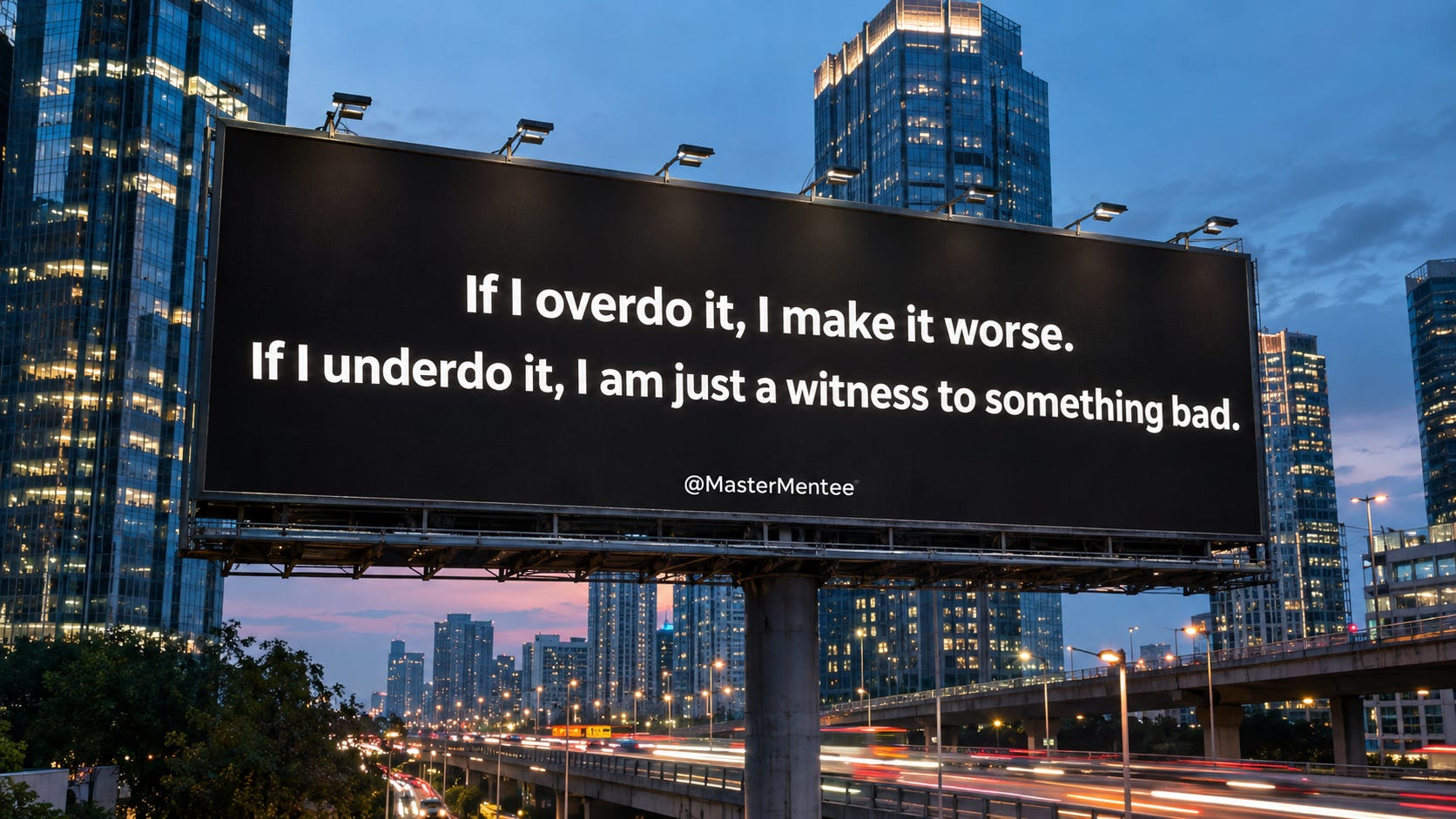
Then I got convinced that I did the right amount. At least that is what I am telling myself.
Leaders far from the ground
Here is what I felt in that call. Many leaders are detached from what happens on the ground. They make the decision or ask the question, but they do not see the work underneath.
Maybe they don’t have time. I understand that. But there should always be a balance. A detached leader still makes decisions. The people on the ground live with the result.
Leaders are measured on three-year or five-year numbers. Individual contributors are measured in six months or a year. So a leader’s impact on the people doing the work is hard to see. By year five, many of the best people have already left the team.
I wrote before that the manager, and the culture they protect, decide whether people thrive or just deliver, in There Are Only Two Ways Work Gets Done. Today was a small proof.
What I’m taking from this
If I ever become a leader, I want to remember this call. If you lead, or want to lead, make some effort to learn what is happening on the ground. Then give your verdict.
Learn the ground first. Then give the verdict.
Have you ever been on the receiving end of a verdict from someone who didn’t understood the work completely?
Or have you been the one giving it? Tell me in the comments.

I send out Master Mentee 🎓 articles with curiosity and a passion for growth. If you’re enjoying it, join the growing mentee squad of curious minds.
💚 If this resonated, tap the 💚—it’s free for you, but it supports my work and helps Master Mentee reach more amazing people like you.